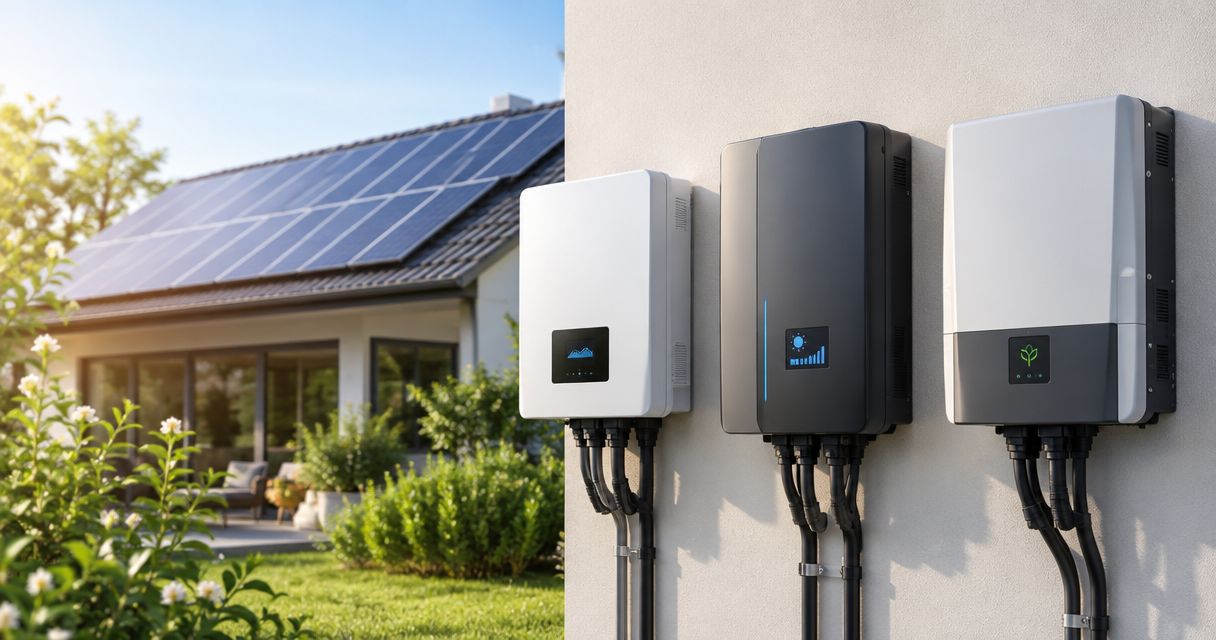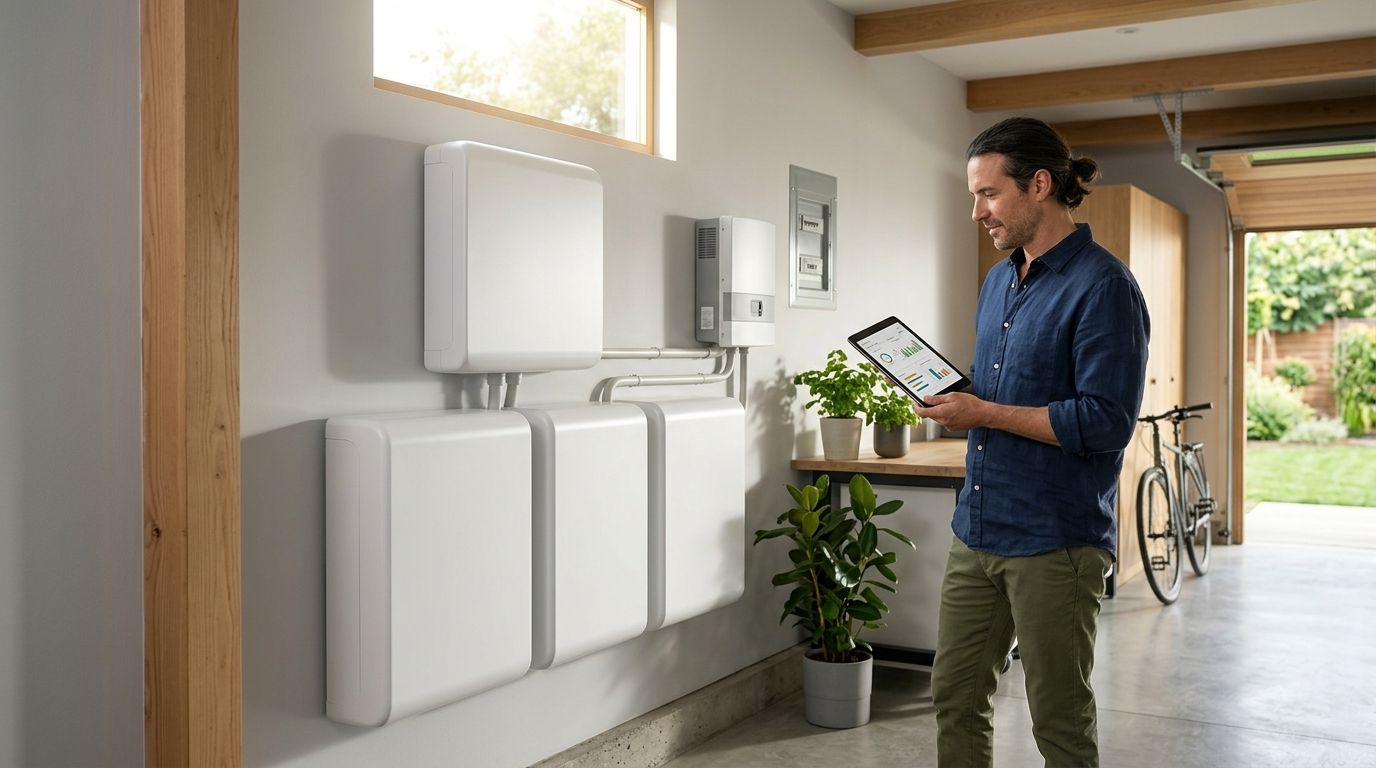
Home battery storage turns Hungarian solar production into usable electricity after sunset, and in 2026 the market has five systems worth comparing seriously. Best overall: Tesla Powerwall 3. Best for modular scaling: BYD Battery-Box Premium HVS. Best for hybrid inverter integration: Huawei LUNA2000. Best budget option: Pylontech US5000. Best for smart energy management: Sonnen eco.
- Tesla Powerwall 3 wins overall with 13.5 kWh usable capacity and a built-in 11.5 kW inverter.
- BYD Battery-Box Premium HVS scales in 5.1-12.8 kWh stacks for homes that expand consumption over time.
- Pylontech US5000 is the best budget entry point for DIY-friendly 4.8 kWh modules.
- Sonnen eco adds smart load management on top of storage, not just backup power.
- Hungary's 2024 net-metering change makes self-consumption -- and therefore battery storage -- the main lever for cutting electricity bills in 2026.
Why this matters in 2026
Since January 2024, new residential solar installations in Hungary no longer qualify for the old net-metering scheme (szaldóelszámolás). Surplus electricity fed back to the grid now gets settled at a lower rate than what you pay to buy power back later. That single regulatory shift changed the math for every Hungarian solar owner: storing your own daytime production and using it at night is now worth more than exporting it.
A home battery is how you capture that value. Eu-Solar sizes battery storage against actual household consumption profiles rather than generic sizing charts, because the wrong capacity either wastes money on unused kWh or leaves you buying grid power in the evening anyway.
This guide ranks the home solar battery storage systems most commonly installed and discussed in the Hungarian market in 2026, based on published manufacturer specifications and how each system fits a specific household situation.
What makes the best home solar battery storage system
- Usable capacity vs. nameplate capacity -- some systems reserve a buffer that never gets marketed clearly.
- Modularity -- can you add a second unit in three years without replacing the first?
- Inverter compatibility -- DC-coupled systems pair with specific hybrid inverters; AC-coupled units retrofit onto existing solar.
- Chemistry and cycle life -- lithium iron phosphate (LFP) dominates 2026 installs for thermal stability over NMC.
- Smart control -- load shifting, time-of-use optimization, and backup-mode switching separate a battery from a smart energy system.
- Installer network depth -- a battery is only as good as the technician who commissions and services it.
Home solar battery storage systems at a glance
| System | Best for | Standout feature | Key limitation |
|---|---|---|---|
| Tesla Powerwall 3 | Whole-home backup | Built-in 11.5 kW hybrid inverter | Locked to Tesla's own app ecosystem |
| BYD Battery-Box Premium HVS | Modular scaling | Stackable 5.1-12.8 kWh high-voltage packs | Requires a compatible high-voltage inverter |
| Huawei LUNA2000 | Hybrid inverter integration | Deep integration with Huawei SUN2000 inverters | Limited benefit if you already own a different inverter brand |
| Pylontech US5000 | Budget / DIY-friendly | Low-voltage 4.8 kWh modules, wide inverter compatibility | No built-in smart load management |
| Sonnen eco | Smart energy management | Built-in energy manager for automated load shifting | Higher entry cost than a plain battery-only unit |
1. Tesla Powerwall 3: best home solar battery storage system for whole-home backup
The Powerwall 3 packs 13.5 kWh of usable capacity with an integrated 11.5 kW inverter, so it handles solar charging and household discharge without a separate hybrid inverter box. That single-unit design is why it tops most whole-home backup shortlists in 2026.
Tesla Powerwall 3 pros:
- Integrated inverter removes one point of failure and one extra purchase
- 13.5 kWh usable capacity covers a typical Hungarian household's evening load
- Backup switchover is near-instant during grid outages
Tesla Powerwall 3 cons:
- Tied to Tesla's app and monitoring ecosystem, with limited third-party integration
- Expanding capacity later means adding a full second unit, not a small module
Best for: households that want one box to handle backup power and daily solar storage with minimal complexity. Verdict: Buy.
2. BYD Battery-Box Premium HVS: best home solar battery storage system for modular scaling
BYD's Battery-Box Premium HVS stacks high-voltage modules from 5.1 kWh up to 12.8 kWh per tower, and multiple towers can run in parallel. That makes it the pick for households planning to add an EV charger or heat pump down the line, where storage needs grow year over year.
BYD Battery-Box Premium HVS pros:
- Add capacity incrementally instead of over-buying up front
- High-voltage architecture keeps efficiency losses low at higher power draws
- Long track record in European residential installs
BYD Battery-Box Premium HVS cons:
- Needs a high-voltage-compatible hybrid inverter, which narrows installer options
- Initial single-stack capacity is modest if you skip the larger configurations
Best for: households expecting rising consumption from an EV or heat pump within the next few years. Verdict: Buy.
3. Huawei LUNA2000: best home solar battery storage system for hybrid inverter integration
The LUNA2000 ships in 5 kWh modules, stackable up to 30 kWh, and is built specifically to pair with Huawei's SUN2000 hybrid inverter line. If your solar system already runs on Huawei hardware, this is the path of least resistance in 2026.
Huawei LUNA2000 pros:
- Tight integration with Huawei inverters simplifies monitoring and firmware updates
- Modular 5 kWh blocks scale cleanly to larger capacities
- Strong presence among installers already working with Huawei solar kits
Huawei LUNA2000 cons:
- Little advantage if your existing inverter is a different brand
- Mixing brands across inverter and battery voids some manufacturer support terms
Best for: homes already running a Huawei SUN2000 inverter that want a matched battery. Verdict: Buy if you're on Huawei hardware; Skip otherwise.
4. Pylontech US5000: best home solar battery storage system for budget installs
The US5000 is a low-voltage, 4.8 kWh LFP module that works with a wide range of existing hybrid inverters, which keeps installation costs down versus proprietary high-voltage systems. It's the module most DIY-leaning installers reach for first.
Pylontech US5000 pros:
- Broad inverter compatibility avoids locking you into one brand
- Low-voltage LFP chemistry is well understood and widely serviced
- Modules stack cheaply as consumption grows
Pylontech US5000 cons:
- No built-in smart energy management -- you need a separate controller for load shifting
- Multiple low-voltage modules take up more physical space than a single high-voltage tower
Best for: budget-conscious households prioritizing capacity per module over smart features. Verdict: Buy.
5. Sonnen eco: best home solar battery storage system for smart energy management
Sonnen eco pairs battery storage with a built-in energy manager that automates when the household draws from solar, battery, or grid based on tariff and consumption patterns. It's less about raw capacity and more about squeezing the most value out of every stored kWh.
Sonnen eco pros:
- Automated load shifting reduces manual monitoring
- Available in a capacity range from roughly 5 kWh up to 20 kWh
- Built for participation in demand-response and smart-grid programs where available
Sonnen eco cons:
- Higher entry cost than a comparable battery-only system
- Full smart-management benefits depend on local tariff structures and grid programs
Best for: households that want active optimization, not just passive storage. Verdict: Hold until your local tariff structure rewards time-of-use shifting; Buy if it already does.
How we ranked these home solar battery storage systems
Each system was weighed against the six criteria above: usable capacity, modularity, inverter compatibility, chemistry, smart control, and installer network depth. No single product wins every category -- the Powerwall 3 sacrifices modularity for simplicity, the US5000 sacrifices smart features for price, and Sonnen eco charges more for automation most competitors don't offer at all.
Get your battery sized correctly
Eu-Solar matches capacity to your actual consumption before you buy.
Which home solar battery storage system should you choose?
If you want one decision and no follow-up questions, Tesla Powerwall 3 covers whole-home backup with the least installation complexity in 2026. If you're planning to add an EV charger or heat pump within a few years, BYD Battery-Box Premium HVS scales without a full replacement. Budget-first households land on Pylontech US5000, and anyone already committed to Huawei's inverter ecosystem should stay there with Huawei LUNA2000.
FAQ
What's the best home solar battery storage system in 2026?
Tesla Powerwall 3 is the best overall pick in 2026, combining 13.5 kWh usable capacity with a built-in hybrid inverter. Households planning future capacity growth may prefer BYD Battery-Box Premium HVS instead.
Is a home battery worth it in Hungary after the 2024 net-metering change?
Yes, because surplus solar exported to the grid now settles at a lower rate than retail electricity prices. Storing daytime production for evening use captures more value than exporting it.
How much capacity does a typical Hungarian household need?
Most households cover an average evening load with 5-13.5 kWh of usable storage, depending on heating and EV charging habits. Eu-Solar sizes this against actual metered consumption rather than a flat estimate.
Is BYD Battery-Box Premium HVS better than Tesla Powerwall 3?
BYD Battery-Box Premium HVS wins on modular scaling since capacity adds in 5.1-12.8 kWh stacks. Tesla Powerwall 3 wins on simplicity with an integrated inverter in one box.
Can I add a battery to an existing solar system?
Most 2026 systems support retrofits, but the battery must match your existing inverter's voltage and communication protocol. Pylontech US5000 has the widest compatibility with existing hybrid inverters.
What's the cheapest way into home battery storage?
Pylontech US5000 modules offer the lowest cost per kWh among widely available 2026 systems, at 4.8 kWh per low-voltage module. They lack built-in smart load management, which some households add separately.
Do smart batteries like Sonnen eco actually save more money?
Sonnen eco's automated load shifting only pays off where local tariffs or demand-response programs reward time-of-use behavior. Without that structure in place, a plain battery-only system delivers similar storage value at lower cost.
How long do home solar batteries last?
LFP-based systems like Pylontech, BYD, and Huawei LUNA2000 are built around lithium iron phosphate chemistry, which is the dominant choice for 2026 residential installs due to thermal stability over older NMC chemistry.
One last thing
The capacity number on the spec sheet isn't the number that matters -- the number that matters is how much of your evening consumption that capacity actually covers, and that depends entirely on your household's own usage curve, not the battery brand. Get that sizing wrong in either direction and you either overpaid for unused kWh or you're still buying grid power at 9pm in 2026.