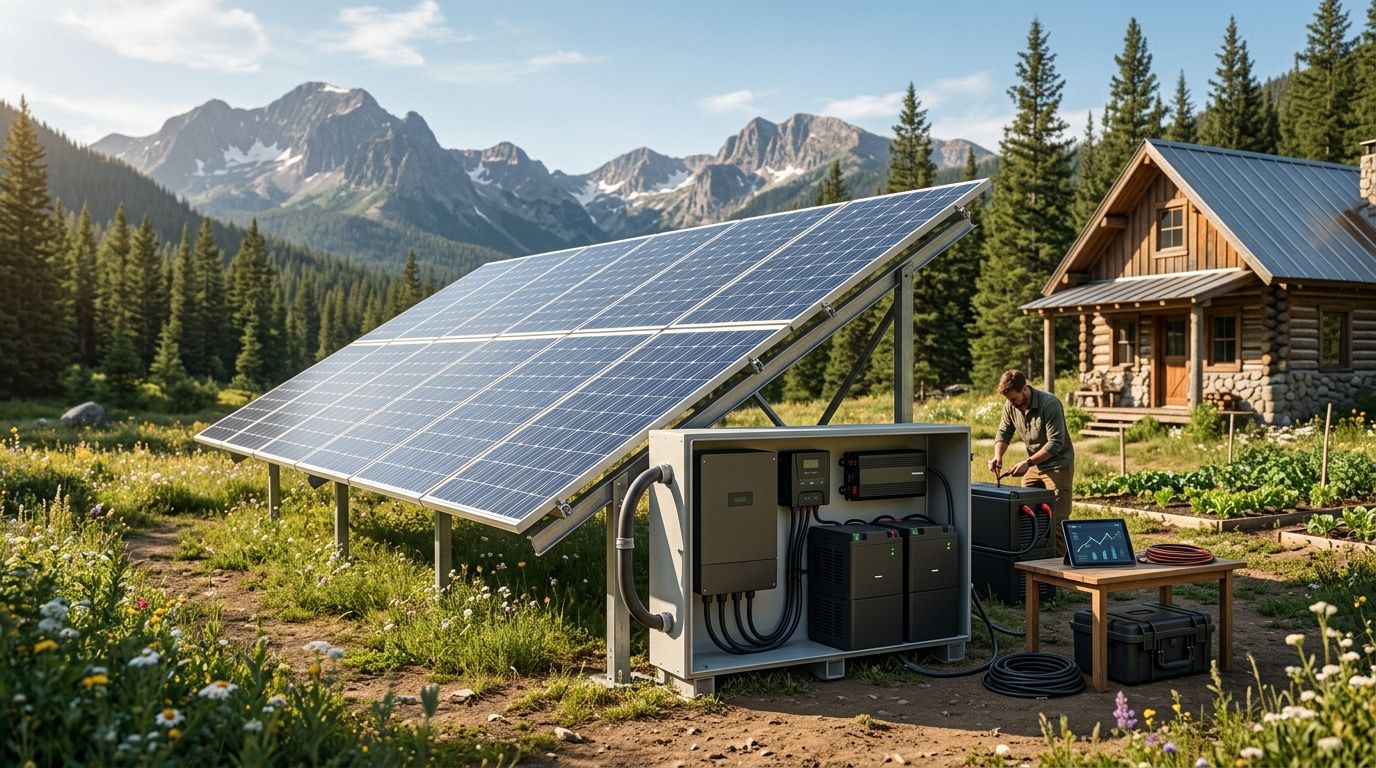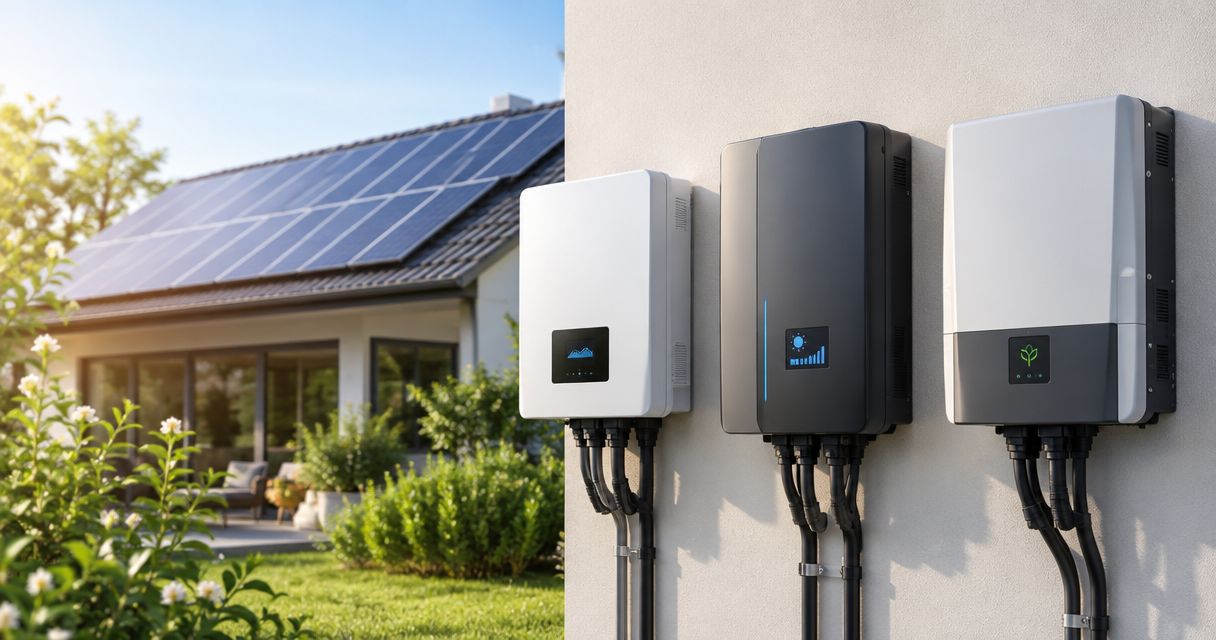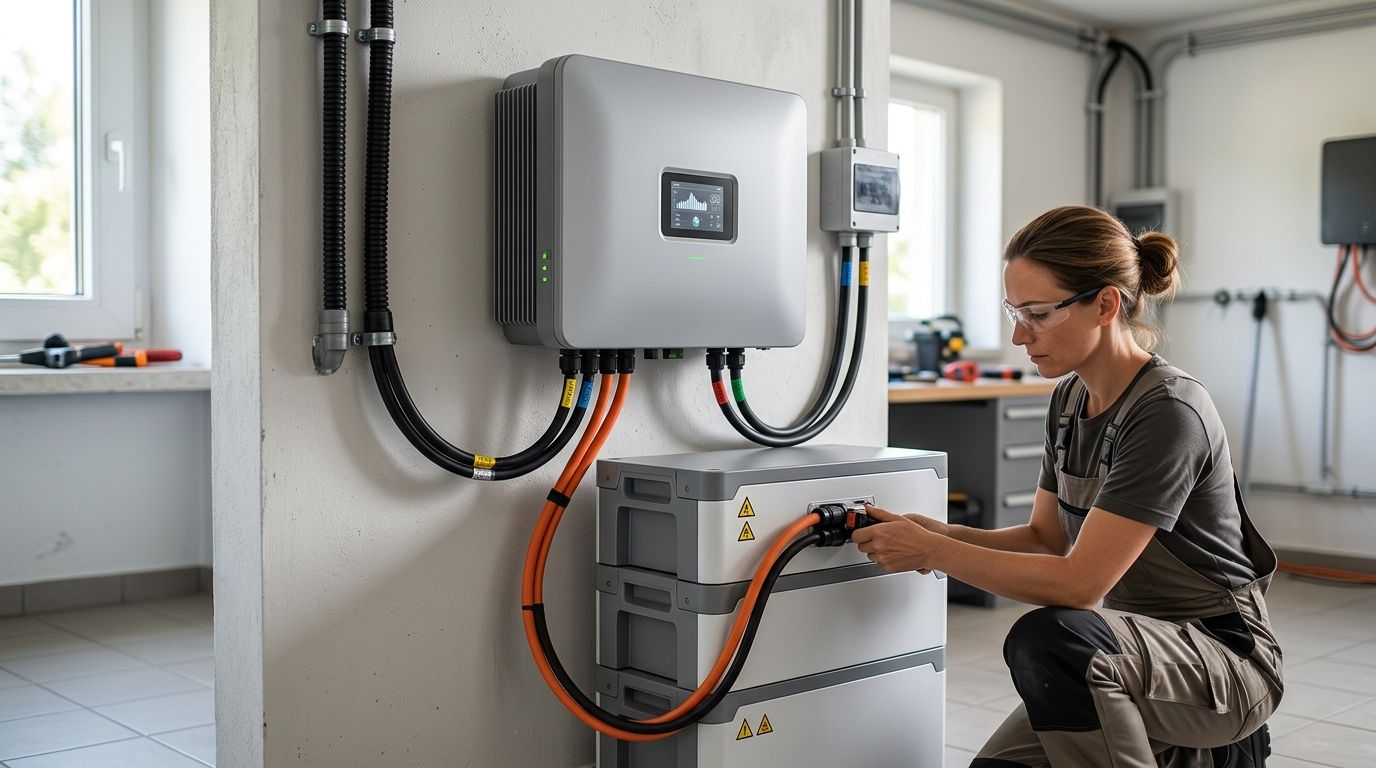
Six hybrid inverters make sense for pairing solar panels with battery storage in Hungary in 2026, and they don't compete for the same buyer. Best overall: Sungrow SH series. Best for smart monitoring: Huawei SUN2000. Best for shaded roofs: SolarEdge Home Hub. Best for backup power reliability: Fronius GEN24 Plus. Best budget hybrid inverter: Deye SUN-K SG. Best for retrofitting an existing solar array: Growatt SPH series.
- Sungrow SH series wins overall for Hungarian homes pairing solar panels with battery storage in 2026.
- Huawei SUN2000 gives the most detailed app-based monitoring among hybrid inverters compared here.
- Fronius GEN24 Plus, built in Austria, handles backup power switchover most reliably during grid outages.
- Deye SUN-K SG is the budget pick for homeowners retrofitting battery storage onto an existing system.
- SolarEdge Home Hub suits roofs with partial shading thanks to panel-level power optimizers.
Why this matters
A hybrid inverter is the single component that decides whether solar panels, a battery, and the grid actually work together instead of fighting each other. Pick the wrong one and you end up with a battery that can't discharge fast enough during an outage, or an inverter that won't talk to the battery chemistry you bought.
More Hungarian homeowners are adding battery storage in 2026 specifically to shift self-consumption away from grid export, and the inverter is what makes that shift possible or not. If you're comparing grid-tied-only models without a battery port, the best solar inverters compared guide covers that separately — this page is only about hybrid units that manage solar, battery, and grid in one box.
Eu-solar sees rising demand for hybrid inverters specifically because battery prices have dropped enough to make payback periods realistic for average Hungarian roofs.
What makes the best hybrid inverter
- Round-trip efficiency between solar input, battery charge/discharge, and grid output
- Battery compatibility — which chemistries and brands the inverter accepts without a third-party gateway
- App-based monitoring — how much data you actually get down to string or panel level
- Backup switchover speed during a grid outage — the difference between a flicker and a full reboot
- Warranty length and local service network in Hungary
- Scalability for adding storage capacity later without swapping the inverter
Hybrid inverters at a glance
| Inverter | Best for | Standout feature | Key limitation |
|---|---|---|---|
| Sungrow SH series | Overall solar + battery pairing | Wide battery compatibility across chemistries | App interface less polished than Huawei's |
| Huawei SUN2000 | Smart monitoring and optimization | Real-time app analytics down to string level | Locked to the Huawei/Luna battery ecosystem |
| SolarEdge Home Hub | Roofs with partial shading | Panel-level power optimizers | Optimizers add extra components on the roof |
| Fronius GEN24 Plus | Backup power reliability | Made in Austria, fast UPS-style switchover | Higher upfront cost than Asian-made alternatives |
| Deye SUN-K SG | Budget hybrid retrofit | Lowest cost per kW of hybrid capacity | Thinner support network in Hungary than bigger brands |
| Growatt SPH series | Retrofitting an existing array | Works with many legacy panel strings | Firmware updates less frequent than top-tier brands |
1. Sungrow SH series: best hybrid inverter for overall solar and battery pairing
The Sungrow SH series is a single-phase and three-phase hybrid inverter line built to accept lithium iron phosphate (LFP) batteries from several manufacturers, not just one house brand. Most residential Hungarian installs land between 5 kW and 10 kW of inverter capacity, and the SH series covers that whole range without forcing a proprietary battery.
Sungrow SH series pros:
- Accepts battery packs from multiple brands, not a closed ecosystem
- Handles single-phase and three-phase homes with the same product family
- Strong track record across European installs since it entered the market
Sungrow SH series cons:
- App and monitoring dashboard are functional but less detailed than Huawei's
- Firmware update cadence varies by regional distributor
Best for: homeowners who want battery flexibility without committing to one manufacturer's whole ecosystem. Verdict: Buy.
2. Huawei SUN2000: best hybrid inverter for smart monitoring
The Huawei SUN2000 pairs with Huawei's Luna battery modules and reports performance data down to individual panel strings through its app, which is the most granular monitoring in this comparison. That level of detail matters if you want to catch a failing string before it drags down the whole array.
Huawei SUN2000 pros:
- Best-in-class app analytics and fault detection
- Fast, stable remote diagnostics for installers
- Modular battery expansion in defined capacity steps
Huawei SUN2000 cons:
- Locked into the Huawei/Luna ecosystem — no mixing battery brands
- Replacement parts and service depend on Huawei's regional distributor network
Best for: owners who want to actively monitor and troubleshoot their system rather than set it and forget it. Verdict: Buy.
3. SolarEdge Home Hub: best hybrid inverter for shaded or complex roofs
SolarEdge pairs its hybrid inverter with panel-level power optimizers, so each panel operates independently instead of the whole string dropping to the output of the weakest panel. That matters on roofs with chimneys, dormers, or partial tree shading where a string inverter alone loses more output.
SolarEdge Home Hub pros:
- Panel-level optimization recovers output lost to partial shading
- Detailed per-panel monitoring through the optimizer layer
- Well suited to complex roof geometries with multiple orientations
SolarEdge Home Hub cons:
- Optimizers on every panel mean more rooftop hardware that can fail
- Adds install complexity compared to a plain string hybrid inverter
Best for: roofs where shading or multiple roof faces would otherwise tank a string inverter's output. Verdict: Buy, if your roof actually has shading to solve.
4. Fronius GEN24 Plus: best hybrid inverter for backup power reliability
Fronius builds the GEN24 Plus in Austria and designs it around a fast, UPS-style backup switchover, so critical circuits stay powered through a grid outage with minimal interruption. That backup interface is the reason installers reach for Fronius when a client specifically wants outage protection, not just bill savings.
Fronius GEN24 Plus pros:
- Fast backup power switchover during grid outages
- European manufacturing and long-standing service reputation
- Flexible AC- or DC-coupled battery configurations
Fronius GEN24 Plus cons:
- Costs more upfront than comparable Asian-made hybrid inverters
- Battery compatibility list is narrower than Sungrow's
Best for: households in areas with frequent outages who want backup power as the primary reason for the purchase. Verdict: Buy, if outage protection is the priority.
5. Deye SUN-K SG: best budget hybrid inverter
Deye's SUN-K SG line delivers hybrid functionality — solar input, battery management, grid interaction — at the lowest cost per kW of capacity in this list. It's a common choice for homeowners retrofitting a battery onto a system that already has solar panels installed and is watching the budget.
Deye SUN-K SG pros:
- Lowest entry cost per kW of hybrid inverter capacity
- Accepts common LFP battery packs without a proprietary gateway
- Adequate for straightforward single-phase residential setups
Deye SUN-K SG cons:
- Thinner installer and service network in Hungary than Sungrow or Huawei
- App and monitoring features are more basic
Best for: budget-conscious retrofits where the priority is adding a battery, not chasing the most polished software. Verdict: Buy, on a tight budget.
6. Growatt SPH series: best hybrid inverter for retrofitting an existing solar array
The Growatt SPH series is built to accept legacy panel strings from older solar installs, which makes it a practical pick when you already have panels on the roof and just want to add battery storage without re-wiring the array. It's a common upgrade path rather than a first-time install choice.
Growatt SPH series pros:
- Broad compatibility with older panel strings and string configurations
- Competitive pricing for the retrofit use case
- Straightforward installer familiarity across the region
Growatt SPH series cons:
- Firmware updates arrive less frequently than top-tier competitors
- Monitoring app is less detailed than Huawei's or SolarEdge's
Best for: homeowners retrofitting battery storage onto solar panels installed years ago. Verdict: Buy, for retrofit projects specifically.
Get a hybrid inverter recommendation
Talk through battery pairing and backup power needs for your Hungarian home.
How we ranked
Each inverter above was weighed against the same six criteria: efficiency, battery compatibility, monitoring depth, backup switchover speed, warranty and local support, and scalability. Eu-solar's installation experience with hybrid inverters across Hungary shaped which limitations made the cons lists — the compatibility and service-network gaps aren't theoretical, they show up during real installs.
No inverter scored well on every criterion. That's the point of a ranked list instead of a single winner: the right hybrid inverter depends on whether you're solving for shading, backup power, cost, or a retrofit.
Which hybrid inverter should you choose?
For most Hungarian households pairing solar panels with new battery storage in 2026, the Sungrow SH series is the safest default — it balances battery flexibility, three-phase support, and installer availability better than any other option here. If outages are a real concern where you live, move to the Fronius GEN24 Plus instead.
Before committing to any hybrid inverter, run the numbers on your specific roof and battery size — the solar system cost and payback guide breaks down how installed cost and battery capacity affect the payback period in 2026. Pairing the inverter choice with the right home solar battery storage system matters as much as the inverter brand itself, and the solar panel brands in Hungary you pick should match the inverter's compatibility list before you order anything.
FAQ
What is the best hybrid inverter for solar and battery systems in 2026?
The Sungrow SH series is the best overall hybrid inverter for solar and battery systems in 2026 because it accepts multiple battery brands and covers both single-phase and three-phase homes. Fronius GEN24 Plus is the better pick specifically for backup power reliability.
Is a hybrid inverter better than a separate solar inverter and battery inverter?
A hybrid inverter combines solar and battery management into one unit, which is simpler to install and monitor than running separate inverters. Separate units can make sense only if you're adding a battery to an existing solar inverter that isn't hybrid-capable.
How much does a hybrid inverter cost compared to a standard solar inverter?
Hybrid inverters cost more than standard grid-tied inverters because they include battery charge controllers and backup power circuitry. Exact pricing varies by capacity and installer, so get a current quote rather than relying on a fixed figure.
Can I add a battery later if I already have a non-hybrid solar inverter?
Yes, through an AC-coupled battery system with its own inverter, though this is usually less efficient than a hybrid inverter designed for both from the start. If you're planning storage within the next few years, installing hybrid from day one avoids the extra hardware.
Which hybrid inverter brand has the best battery compatibility?
Sungrow's SH series accepts battery packs from the widest range of manufacturers among the models compared here. Huawei's SUN2000, by contrast, only works with Huawei's own Luna battery modules.
How fast does a hybrid inverter switch to backup power during an outage?
Premium hybrid inverters like the Fronius GEN24 Plus are designed for near-seamless UPS-style switchover, keeping sensitive electronics running through the transition. Budget models can have a noticeable, though brief, interruption before backup power kicks in.
Do I need a three-phase hybrid inverter for a Hungarian home?
Only if your home has a three-phase electrical connection, which is common in larger Hungarian houses with higher electrical loads. Single-phase homes should stick to single-phase hybrid models to avoid unnecessary cost and complexity.
One last thing
Size the hybrid inverter for the battery you'll eventually own, not just the one you're buying today — most homeowners add storage capacity within a few years of the first install, and an undersized inverter means a full swap instead of a simple battery module addition. Eu-solar and most installers active in Hungary in 2026 recommend leaving headroom in the inverter's rated capacity specifically for that reason.