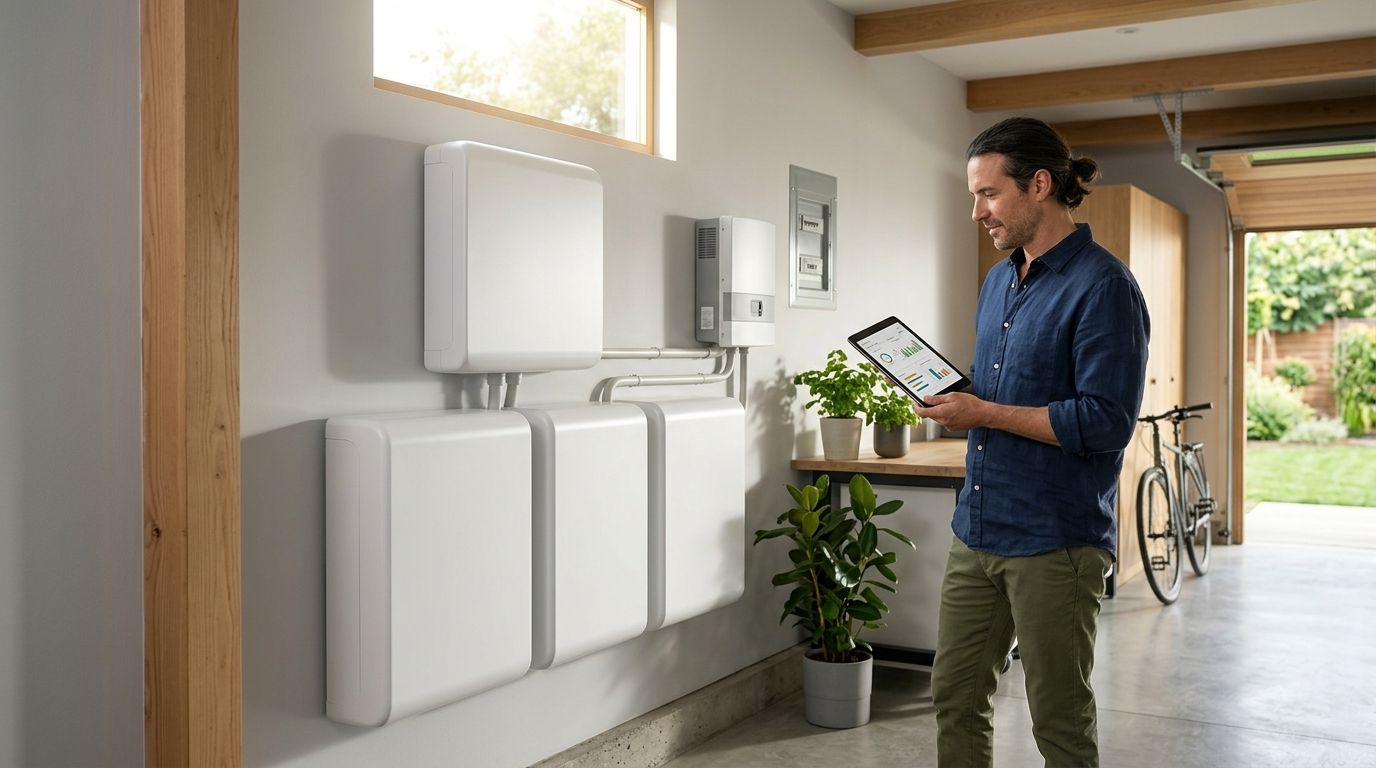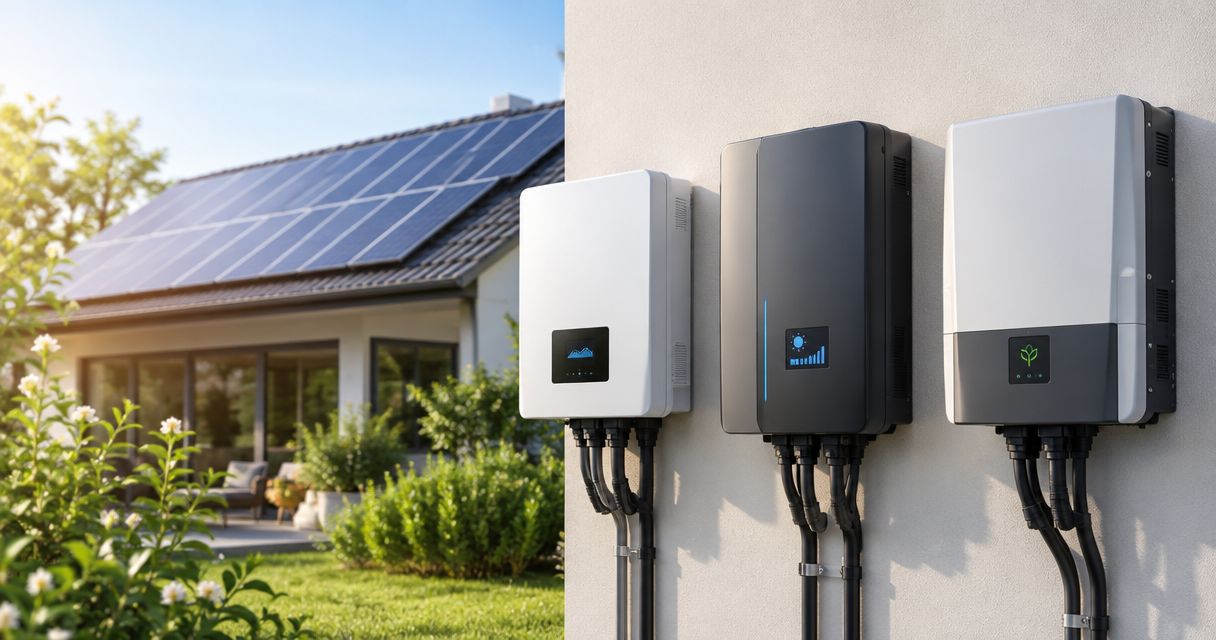
Six solar inverter brands dominate residential and small commercial installs in Hungary in 2026: Huawei SUN2000, SolarEdge HD-Wave, Fronius Primo/Symo, GoodWe ET/EH, SMA Sunny Boy and Growatt MIN. This guide ranks them by monitoring quality, roof compatibility, hybrid readiness and service support so you pick the right unit for your roof instead of the loudest spec sheet.
- Huawei SUN2000 wins best solar inverters compared 2026 for smart monitoring and arc-fault protection.
- SolarEdge HD-Wave is the pick for roofs with partial shading or more than one orientation.
- GoodWe ET/EH is the budget-friendly hybrid inverter that stays battery-ready without extra hardware.
- Fronius Primo/Symo leads on European service network coverage and build quality reputation.
- Hungarian household PV systems typically run 3 kWp to 10 kWp under the 50 kVA HMKE threshold.
Why this matters
The inverter, not the panel, decides how much of your generated power actually reaches your meter. A mismatched inverter clips output on sunny days, throws false fault alerts, or simply won't talk to a battery when you add one in 2027.
Eu-solar sizes and matches every solar inverter to the roof and the array before ordering equipment, because the wrong pick here costs more over ten years than the unit itself. This comparison covers what actually separates these six brands in real installs, not marketing claims.
What makes the best solar inverter
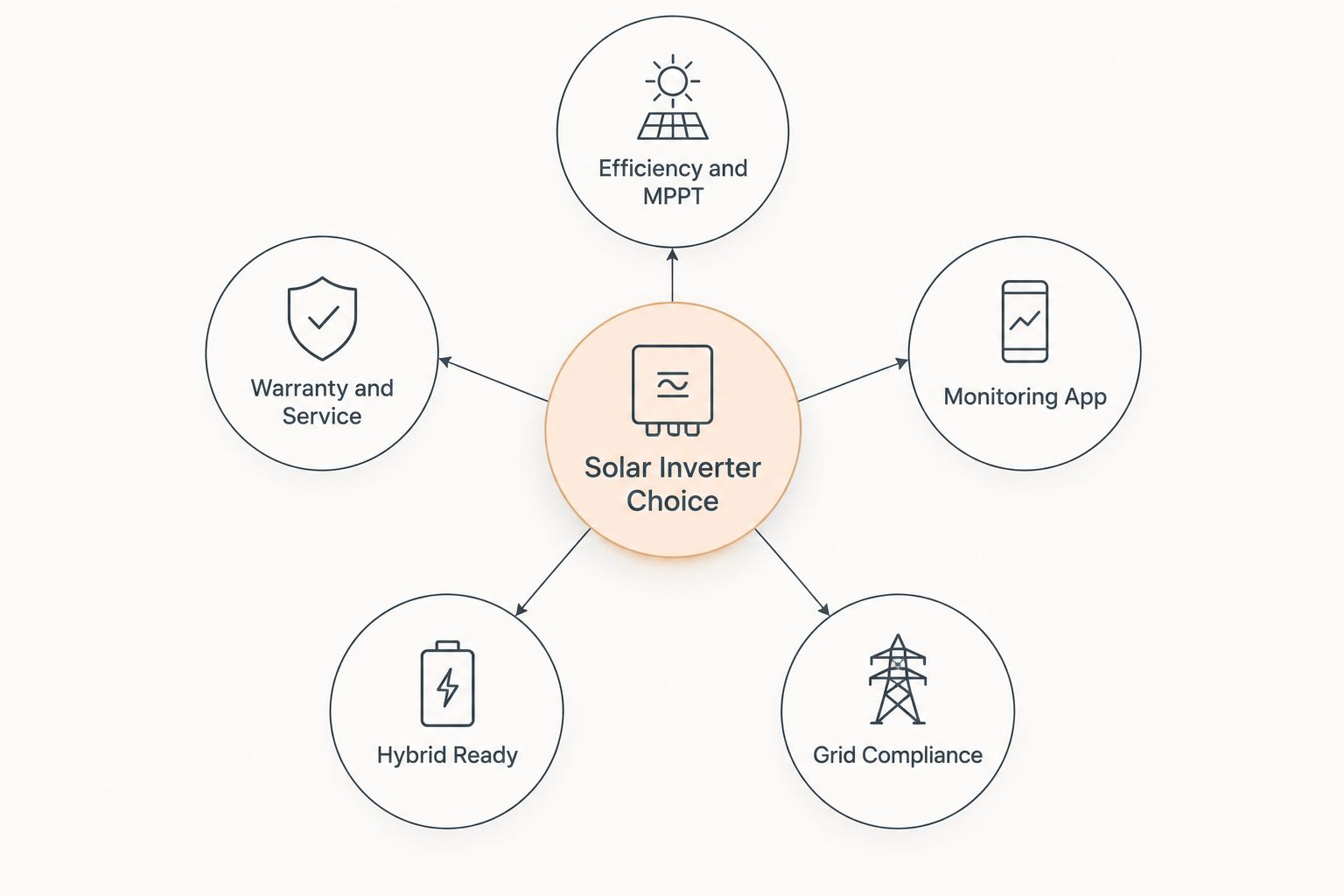
- Efficiency and MPPT tracking — how well it handles multiple roof faces or partial shade
- Warranty and service network — who answers the phone when a unit faults in year six
- Monitoring app and fault alerts — remote visibility without a site visit
- Hybrid or battery-ready design — whether you can add storage later without swapping the inverter
- Grid-compliance certification — compatibility with the Hungarian standard MSZ EN 50549-1 and HMKE (household-size small producer) registration up to 50 kVA
- Noise level and mounting footprint — relevant for garages, utility rooms and shared walls
Best solar inverters compared 2026 — at a glance
| Inverter | Best for | Standout feature | Key limitation |
|---|---|---|---|
| Huawei SUN2000 | Smart monitoring overall | FusionSolar app with per-string fault detection | Cloud monitoring depends on a stable home network |
| SolarEdge HD-Wave | Shaded or multi-face roofs | Panel-level power optimizers | Optimizers add a failure point at each panel |
| Fronius Primo/Symo | European service reliability | Austrian-built with wide EU installer base | Fewer software extras than Chinese rivals |
| GoodWe ET/EH | Budget hybrid setup | Battery-ready without a second inverter | Monitoring app is less polished than Huawei's |
| SMA Sunny Boy | Large residential/commercial arrays | Long-standing German engineering track record | Overkill and pricier footprint for a small 3 kWp roof |
| Growatt MIN | Small rooftop installs | Compact size, simple single-phase setup | Thinner support network in Hungary than SMA or Fronius |
1. Huawei SUN2000: best solar inverter overall for smart monitoring
The SUN2000 pairs with Huawei's smart string optimizers and reports per-string performance through the FusionSolar app, so a shaded panel or a loose connector shows up as a specific alert instead of a vague output drop.
Huawei SUN2000 pros:
- Arc-fault detection built into the string design
- App-based monitoring down to individual panel strings
- Works with single-phase and three-phase residential setups
Huawei SUN2000 cons:
- Full diagnostic detail needs Huawei's own smart optimizers, not third-party panels
- App reporting depends on your home Wi-Fi or LTE dongle staying online
Best for: homeowners who want fault visibility without calling an installer every time output dips. Verdict: Buy.
2. SolarEdge HD-Wave: best solar inverter for shaded or complex roofs
SolarEdge moves MPPT tracking down to a power optimizer on every panel instead of tracking strings at the inverter. That architecture means one shaded or dirty panel doesn't drag down the output of the whole string.
SolarEdge HD-Wave pros:
- Panel-level optimization handles chimneys, dormers and partial shade well
- Panel-level monitoring pinpoints the exact underperforming module
- Works across roofs with multiple orientations on one inverter
SolarEdge HD-Wave cons:
- Each optimizer is an added component that can fail independently
- More hardware on the roof means a more complex install
If your roof has more than one shaded section or faces two different directions, skip a single-string inverter and go optimizer-based instead.
Best for: complicated roofs with chimneys, dormers or east-west splits. Verdict: Buy.
3. Fronius Primo/Symo: best solar inverter for European service reliability
Fronius builds the Primo and Symo lines in Austria and runs one of the widest installer and service networks across the EU, which matters when a part needs replacing rather than a full unit swap.
Fronius Primo/Symo pros:
- Strong build reputation among European installers
- Fronius Solar.web app covers monitoring without extra hardware
- Wide availability of spare parts and certified technicians in the EU
Fronius Primo/Symo cons:
- Fewer software extras compared with Huawei's fault-detection depth
- Physically larger housing than some newer competitors
Best for: buyers who weigh long-term service access over app features. Verdict: Buy.
4. GoodWe ET/EH Series: best budget hybrid solar inverter
The ET/EH series is built as a hybrid unit from the start, meaning it accepts battery storage without needing a second inverter bolted on later. That matters if you're not adding a battery in 2026 but plan to in a year or two.
GoodWe ET/EH pros:
- Battery-ready design avoids a second inverter purchase later
- Competitive positioning for hybrid capability among mainstream brands
- Supports backup power modes on compatible battery setups
GoodWe ET/EH cons:
- Monitoring app and interface feel less refined than Huawei's or Fronius's
- Support network in Hungary is thinner than the established German and Austrian brands
Best for: homeowners planning a battery addition without wanting to pay for it now. Verdict: Buy.
5. SMA Sunny Boy: best solar inverter for large residential or commercial arrays
SMA has one of the longest track records in the European inverter market, and the Sunny Boy line scales well for larger roofs or small commercial installs where reliability at scale matters more than app polish.
SMA Sunny Boy pros:
- Long-standing German engineering reputation
- Handles larger array sizes without stacking multiple small inverters
- Established service presence across Central Europe
SMA Sunny Boy cons:
- Larger footprint and capacity than a small 3 kWp roof needs
- Less budget-friendly positioning than Growatt for entry-level systems
Best for: larger roofs or small commercial sites past the typical 10 kWp household range. Verdict: Buy for larger arrays, Skip for a small starter roof.
6. Growatt MIN Series: best solar inverter for small rooftop installs
Growatt's MIN series targets compact single-phase residential setups, keeping the unit small and the install straightforward for a roof that doesn't need multiple MPPT strings.
Growatt MIN pros:
- Compact housing fits tight utility rooms or garages
- Straightforward single-phase setup for smaller systems
- Lower entry point among the six brands compared here
Growatt MIN cons:
- Support network in Hungary lags Fronius and SMA
- Fewer hybrid and monitoring extras than GoodWe or Huawei
Best for: small roofs where a compact, simple single-phase inverter is enough. Verdict: Buy for small systems, Hold if you're planning to expand the array later.
How we ranked these solar inverters
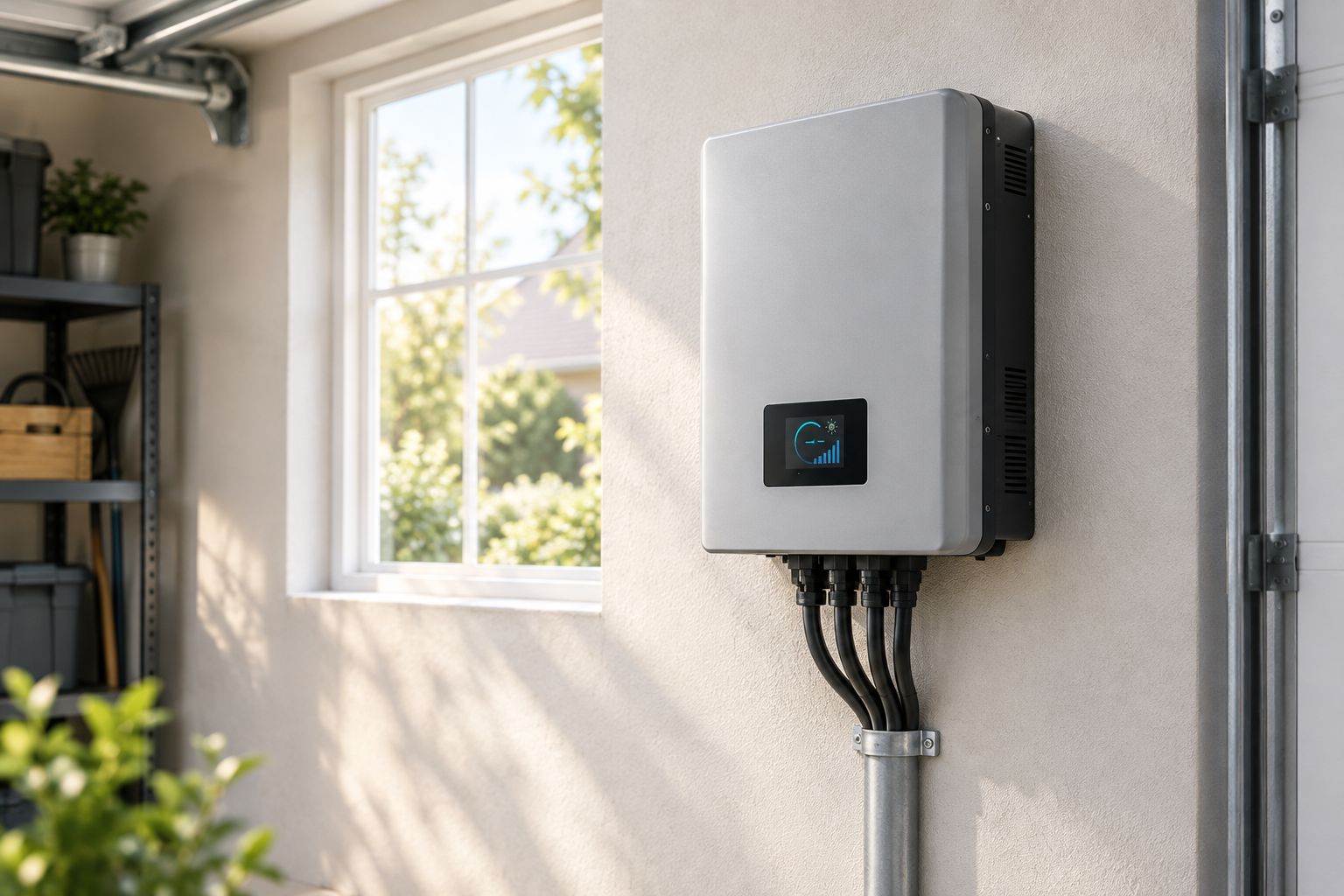
Each brand above was scored against the six criteria listed earlier: MPPT/efficiency handling, warranty and service reach, monitoring quality, hybrid readiness, Hungarian grid-compliance fit, and physical footprint. The ranking favors real installer feedback and manufacturer documentation over marketing copy, and every pick got an honest limitation, including the ones near the top.
Get your roof matched to an inverter
Eu-solar sizes the inverter to your array and roof shape before you order anything.
Which solar inverter should you choose in 2026?
For a straightforward roof with no shading, the Huawei SUN2000 covers most Hungarian households well with strong monitoring and arc-fault protection. If your roof has chimneys, dormers, or faces two directions, the SolarEdge HD-Wave earns its extra hardware through panel-level optimization. Planning a battery in the next year or two without paying for hybrid capability now? The GoodWe ET/EH is built for exactly that.
For anyone still undecided, Eu-solar's default recommendation for a typical 5-8 kWp Hungarian rooftop without shading is the Huawei SUN2000, with SolarEdge as the fallback the moment shade or multiple roof faces enter the picture.
FAQ
What is the best solar inverter overall in 2026?
The Huawei SUN2000 is the best solar inverter overall in 2026 for most unshaded residential roofs, thanks to its string-level fault detection and FusionSolar monitoring app. Roofs with shading or multiple orientations do better with SolarEdge's panel-level optimizers instead.
Is a hybrid inverter better than a standard string inverter?
A hybrid inverter is better only if you plan to add battery storage, since it accepts a battery connection without a second unit. If you have no battery plans, a standard string inverter like Fronius Primo does the same solar-to-grid job for less complexity.
How much does a solar inverter cost in Hungary?
Cost depends on the system's kWp size, the brand, and installation complexity, so there's no single figure that applies across roofs. Eu-solar provides a site-specific quote once the array size and inverter type are matched to your roof.
Do I need a hybrid inverter for battery storage?
Yes, if you want battery storage without adding a second inverter, you need a hybrid unit like the GoodWe ET/EH from the start. Retrofitting battery capability onto a non-hybrid string inverter usually means installing a separate battery inverter alongside it.
What size solar inverter do I need for a 5 kWp system?
Match the inverter's AC output rating close to the array's DC size, with installers commonly allowing the panel array to run 10-20% larger than the inverter's rated AC output to capture more low-light generation. A 5 kWp array typically pairs with an inverter rated close to that AC figure.
Can I mix inverter brands in one PV system?
Technically yes if you run separate strings on separate inverters, but monitoring, warranty claims and fault diagnosis get harder to manage across two brands. Most installers, including Eu-solar, stick to one inverter brand per system for that reason.
Is SolarEdge better than Huawei for shaded roofs?
Yes, SolarEdge is better for shaded roofs because its power optimizers work at the individual panel level, so one shaded module doesn't drag down an entire string's output. Huawei's string-level tracking handles minor shading but performs worse than optimizer-based systems on roofs with chimneys or dormers.
Does Hungary require inverters to meet a specific grid standard?
Yes, grid-tied inverters installed in Hungary need to comply with MSZ EN 50549-1 for grid connection and register as a household-size small producer (HMKE) if the system stays under 50 kVA. All six inverters compared here are sold with EU grid-compliance certification that covers this requirement.
One last thing
Most installers, Eu-solar included, size the panel array 10-20% larger than the inverter's rated AC output on purpose. That oversizing doesn't waste panels — it pushes more output through the inverter during the low-light hours of early morning and late afternoon, when a matched 1:1 ratio would leave capacity unused. If your quote shows the array capacity above the inverter's AC rating, that's the design working correctly, not a sizing mistake.